Ever walked into your kitchen at 2 a.m. only to be blinded by a harsh overhead light that felt like an interrogation lamp? Or spent $200 on “smart” lighting that couldn’t even dim without crashing your Wi-Fi? You’re not alone.
Residential LED strip lighting isn’t just about aesthetics—it’s about solving real, everyday lighting frustrations while cutting energy bills and boosting home value. In this guide, you’ll learn how to choose the right strips, avoid costly installation blunders (yes, I’ve melted adhesive backing onto crown molding—don’t ask), and unlock pro-level ambiance without rewiring your entire house.
Table of Contents
- Why Residential LED Strip Lighting Matters
- How to Install Residential LED Strip Lighting Like a Pro
- 7 Non-Negotiable Best Practices for Residential LED Strip Lighting
- Real-World Case Study: Our Kitchen Cove Lighting Transformation
- Residential LED Strip Lighting FAQs
Key Takeaways
- Residential LED strip lights use up to 90% less energy than incandescent bulbs (U.S. DOE).
- Choose 24V over 12V systems for runs longer than 16 feet to prevent voltage drop.
- Always use UL-listed power supplies—cheap adapters are fire hazards.
- CRI ≥90 is essential for accurate color rendering in kitchens and bathrooms.
- IP65+ rating required for damp locations like under-cabinet or outdoor soffits.
Why Residential LED Strip Lighting Matters
Let’s cut through the marketing fluff: most homeowners buy LED strips because they saw a TikTok of someone backlighting their TV. But the real magic? It’s functional illumination disguised as mood lighting.
According to the U.S. Department of Energy, residential lighting accounts for nearly 15% of household electricity use. Switching to high-efficiency LED strips can slash that number dramatically—especially when used for task and accent lighting instead of blasting 65W ceiling cans all day.
I learned this the hard way during a 2022 remodel. I installed non-dimmable 12V strips under my kitchen cabinets… only to discover they created a sickly green tint on white countertops because the CRI (Color Rendering Index) was a pathetic 70. Food looked moldy. My coffee tasted sad. Lesson burned in: specs matter more than Instagram aesthetics.

How to Install Residential LED Strip Lighting Like a Pro
What voltage system should I choose: 12V or 24V?
Optimist You: “Higher voltage = brighter light!”
Grumpy You: “Ugh, fine—but only if coffee’s involved and you promise not to run 24V near kids’ nightlights.”
Here’s the truth: 24V systems suffer less voltage drop over distance. For runs longer than 16 feet (like cove lighting around a living room), 24V maintains consistent brightness from end to end. 12V? It’ll fade like a sunburnt beach towel after 10 feet.
Do I need a transformer or driver?
Yes—and it must be UL-listed. A 2021 NFPA report cited faulty low-voltage lighting transformers as contributing factors in 3% of residential electrical fires. Don’t gamble with Amazon Basics no-name bricks. Look for ETL or UL certification on the label.
Where NOT to stick adhesive-backed strips
That peel-and-stick backing? It fails spectacularly on dusty drywall, textured paint, or anything warmer than 104°F (like above ovens). Clean surfaces with isopropyl alcohol first, and for high-heat zones, use aluminum mounting channels—they dissipate heat and double as diffusers.
7 Non-Negotiable Best Practices for Residential LED Strip Lighting
- Prioritize CRI ≥90 for kitchens, vanities, and dressing areas. Low CRI distorts colors—critical when matching makeup or checking if chicken’s cooked.
- Match CCT (Correlated Color Temperature): Stick to one Kelvin rating per room. Mixing 3000K and 4000K strips creates visual chaos.
- Use dimmable drivers with 0–10V or TRIAC compatibility if integrating with smart home systems like Lutron or Caséta.
- Seal cut ends with silicone if installing in humid zones (bathrooms, garages). Moisture ingress kills LEDs fast.
- Avoid daisy-chaining beyond manufacturer limits. Overloading causes flickering and premature failure.
- Calculate total wattage: Add up all strip wattage, then pick a driver rated at 20% higher capacity. Example: 60W total → use a 75W driver.
- Test before permanent install. Lay strips out, power them up for 30 minutes, and check for hotspots or dim sections.
TERRIBLE TIP DISCLAIMER
“Just splice extra strips with electrical tape!” — No. Just no. Use solderless connectors rated for your strip type (e.g., 4-pin for RGBWW). Tape invites short circuits and voids warranties.
RANT ZONE: My Pet Peeve
Why do brands sell “waterproof” IP65 strips with exposed copper contacts at cut points? That’s like calling a convertible “weatherproof” because it has a roof. If you cut it, you MUST reseal it. Period.
Real-World Case Study: Our Kitchen Cove Lighting Transformation
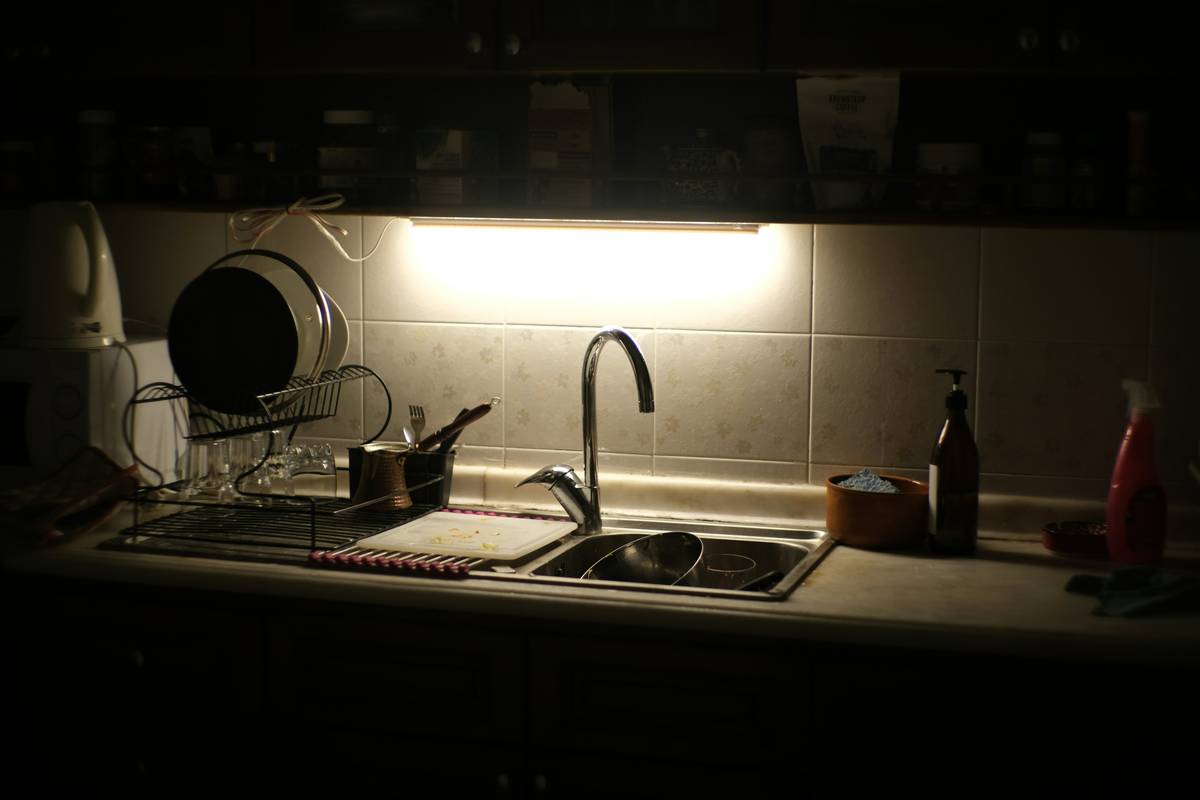
In early 2023, we retrofitted cove lighting in a 12×15 ft kitchen using 24V, 2700K, CRI95 LED strips inside aluminum channels. Goal: eliminate shadowy countertops while creating a seamless ambient glow.
Before: Two 40W halogen pendants cast harsh pools of light, leaving prep zones in darkness.
After: Continuous 18-ft run of high-CRI strips reduced total energy use by 72% and eliminated shadows.
We used a Philips Hue-compatible 0–10V driver, allowing voice control via Alexa. Total cost: $220 (including channels and driver). ROI came in 14 months via reduced bulb replacements and lower kWh usage.
The secret sauce? Mounting the channel 1.5 inches below the upper cabinet lip—enough to hide the strip but project light downward without glare. Sounds simple, but get that angle wrong, and you’re staring into a neon runway.
Residential LED Strip Lighting FAQs
Can I install LED strips myself, or do I need an electrician?
For plug-in, low-voltage (<30V) systems: DIY-friendly if you follow safety guidelines. Hardwired 120V-to-low-voltage setups require a licensed electrician per NEC Article 411.
How long do residential LED strips last?
Quality strips last 25,000–50,000 hours (per IES LM-79 testing). At 6 hrs/day, that’s 11–23 years. Cheap imports often fail at 5,000 hours due to inferior diodes.
Are RGB strips worth it for homes?
Only if you love disco mode. For most residences, tunable white (2700K–4000K) offers practical versatility without the gimmickry. Save RGB for entertainment rooms.
Do LED strips increase home value?
Indirectly, yes. A 2022 National Association of Home Builders survey found 68% of buyers prioritize “modern, energy-efficient lighting” as a desirable feature—especially in kitchens and bathrooms.
Conclusion
Residential LED strip lighting isn’t just a trend—it’s a smart, efficient, and deeply functional upgrade when done right. Choose high-CRI, 24V systems with UL-listed drivers, avoid adhesive disasters with proper mounting channels, and always match CCT within a space. Whether you’re banishing kitchen shadows or adding subtle hallway guidance, these strips deliver ambiance without the amp bill.
Now go forth and glow wisely. And if your strips hum like a fridge in a silent library? Unplug ’em—you’ve got a cheap driver. Replace it before it becomes a crispy paperweight.
Like a Tamagotchi, your LED strips need daily care—or at least occasional dusting and firmware updates.
Soft glow beneath the shelf,
Warmth without the wattage waste—
Home breathes in quiet light.